Sourdough Discard Bagel Recipe
Sourdough discard bagel recipes — chewy sourdough discard bagels with a little yeast for lift, boiled in malt syrup, baked hot.
By Maya Ellison · Reviewed by Maya Ellison · Updated August 18, 2026 · 2 min read
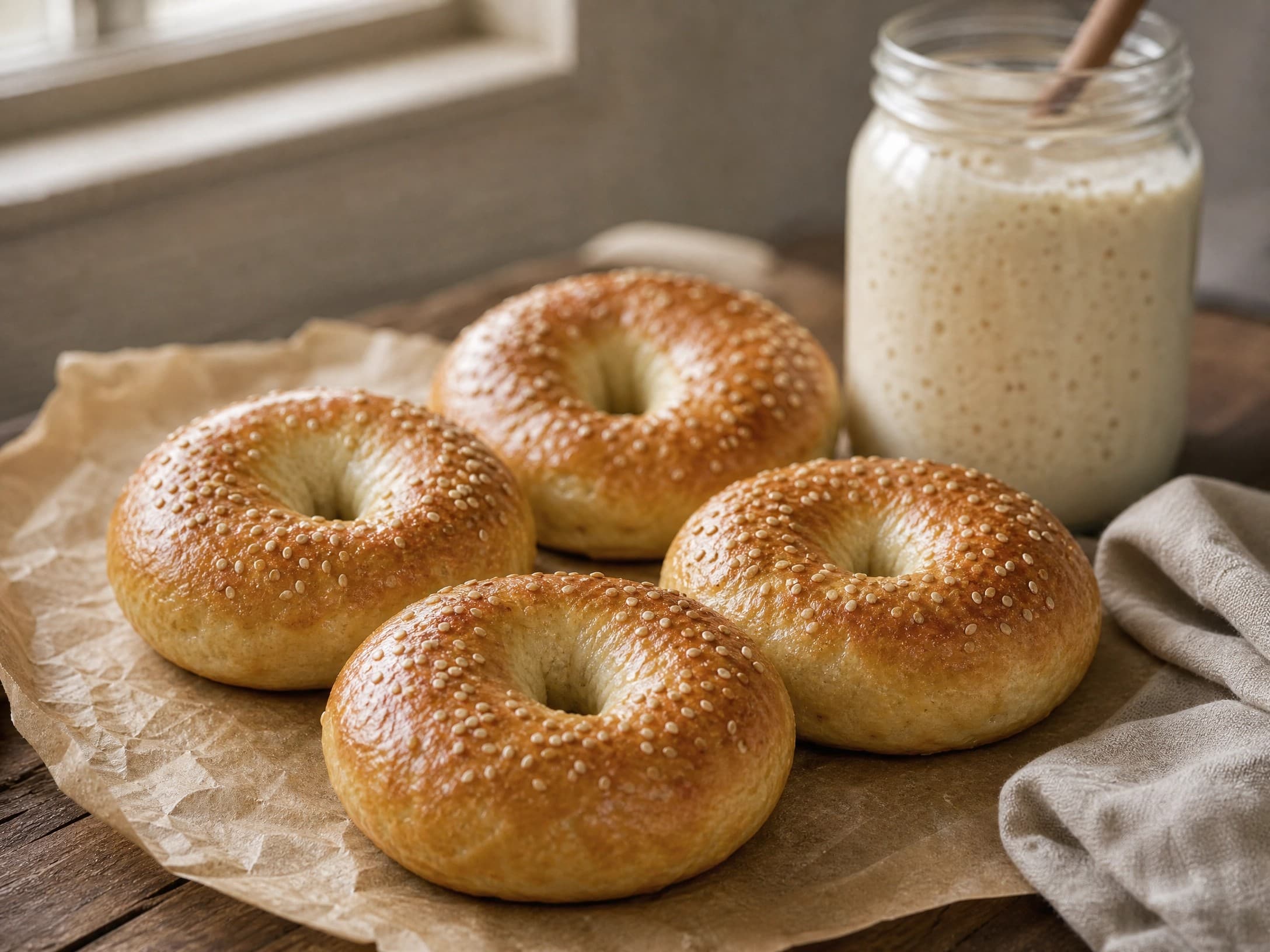
Sourdough discard bagel recipes are everywhere and most of them are a trap for beginners. A discard-only bagel is a stiff, slow, finicky dough: the starter's weak fermentation struggles to lift that heavy ring of flour and the results are often dense, tough bricks — even for experienced bakers. This recipe makes the honest tradeoff: it uses discard for flavor and a little instant yeast for reliable lift, so you get a chewy, crackly, consistently excellent bagel every time. These are easy bagels with sourdough discard — about 4 hours start to finish, most of it inactive.
The honest tradeoff
Pure sourdough bagels need a young, active, strong starter, a precise schedule and usually a 24-hour cold ferment — too many variables for a first attempt. The discard version takes the hardest parts off the table: the 3 g of yeast guarantees the lift, while the discard contributes the fermentation tang and a slightly more complex crumb. Taste them side by side after the boil and bake and most people can't tell the difference. If you want the full sourdough-only project later, come back with a mature starter in hand — the starter guide will get you there.
Why this recipe works
Kneading to full gluten development — a full 8-10 minutes — is what gives bagels their distinctive chew; this is the rare bread where you can't take the no-knead shortcut. The boil is the other half: hot water gelatinizes the surface starch, which locks in moisture and creates the glossy, crackly shell, while the malt syrup in the water adds color and that familiar malty note. Skip the boil and you've made rolls.
The proof and the cold proof
Shaped bagels proof 1-2 hours at room temperature until puffy. Use the float test as your check: a proofed bagel floats in cold water, an under-proofed one sinks. For a better bagel, cold-proof in the fridge for 8-24 hours instead: the cold deepens the flavor, tightens the crumb and develops a cracklier crust. It costs nothing but time and it's the single best upgrade this recipe offers.
Toppings and variations
Everything-bagel seasoning is the classic; sesame, poppy, or flaky salt all work and the tops catch the topping best while the boiled bagels are still wet. Fold 60 g of raisins and 15 g of cinnamon-sugar into the dough for a cinnamon-raisin version. If you want to lean further into the discard for flavor, try a slightly longer cold proof rather than more discard — it does more for the taste.
Storage
Bagels keep 2-3 days at room temperature in a paper bag. They freeze for up to 3 months: slice before freezing and toast straight from frozen, which is honestly how most bagels are best eaten. If a batch goes wrong — dense rings, flat rings — the troubleshooting guide covers the usual culprits and the sourdough discard recipes hub has more ways to use the jar.
Ingredients
Weights in grams are the source of truth; cup measures are approximate.
- 200 g sourdough discard (unfed, straight from the fridge)
- 500 g bread flour (about 4 cups)
- 260 g warm water (about 1 cup plus 2 tablespoons)
- 3 g instant yeast (about 1 teaspoon)
- 10 g fine salt (about 1 3/4 teaspoons)
- 30 g barley malt syrup or honey, for the boiling water
- 20 g sugar or honey (optional, in the dough)
- 30 g everything-bagel seasoning, sesame seeds, or flaky salt, for topping
- 15 g cornmeal or rice flour, for dusting the parchment
Method
In a large bowl, whisk the bread flour and salt together.
Stir the instant yeast into the warm water, add the sourdough discard and the sugar or honey if using and mix until the discard is fully dissolved.
Pour the liquid into the flour and mix into a stiff dough — add a tablespoon of extra flour only if it's unworkably sticky, but keep it as moist as you can manage.
Turn the dough out and knead for 8-10 minutes, until it is smooth, elastic and no longer tacky — this is the step that creates the bagel's chew.
Cover the dough and rest it 10-15 minutes so the gluten relaxes.
Divide the dough into 6-8 pieces (about 120-160 g each) and shape each one: roll it into a rope about 8 inches long and pinch the ends together, or poke a hole through a ball and stretch it open.
Proof the shaped bagels, covered, for 1-2 hours at room temperature until puffy — or transfer them to the fridge for an 8-24 hour cold proof for a better crust.
Test the proof: drop a bagel in a bowl of cold water — if it floats, it's ready; if it sinks, give it 20-30 minutes more.
Bring a large pot of water with the malt syrup or honey to a rolling boil, then boil the bagels 30-45 seconds per side.
Lift the bagels out with a slotted spoon onto a wire rack and, while still wet, dip the tops in everything-bagel seasoning, sesame seeds, or flaky salt.
Arrange the bagels on a parchment-lined sheet dusted with cornmeal and bake at 450°F (230°C) for 20-25 minutes, rotating the pan halfway through, until deep golden brown.
Cool on a wire rack for at least 20 minutes — the chew develops as they cool, so don't slice into them hot.
Frequently asked questions
Why not make these with discard only, with no commercial yeast?
Because a pure discard bagel is a stiff, slow, finicky dough — the weak fermentation struggles to lift a dense ring of flour and the result for most home bakers is a brick. You can absolutely do it, but it needs a young, vigorous starter and a precise 24-hour cold ferment. The tradeoff here is deliberate: a little yeast guarantees a chewy, crackly bagel every single time, with the discard still providing the flavor. For the classic active-starter, boiled-and-baked version, see the [sourdough bagels](/sourdough-bagels) recipe.
What does the malt syrup do and can I skip it?
Malt syrup in the boiling water adds sweetness, color and that classic bagel flavor you can't quite place. Honey works nearly as well and plain water works fine in a pinch — the boil is what matters, not the sweetener. Use about 1 tablespoon per 8 cups of water.
Why do bagels need to be boiled at all?
The boil gelatinizes the starch on the surface, which sets the crust and locks moisture inside. That's the entire difference between a bagel and a dinner roll — skip the boil and you've made a chewy roll. Keep the water at a rolling boil and time each side; 30-45 seconds is the sweet spot.
What does the overnight cold proof actually change?
Everything you taste: 8-24 hours in the fridge deepens the fermentation flavor, tightens the crumb and gives a cracklier, glossier crust when the bagels hit the oven. It also makes the dough far easier to handle. It's the single best upgrade this recipe offers and it costs nothing but planning.
My bagels came out dense and heavy. What went wrong?
Usually one of three things: they were under-proofed (use the float test and wait for the float), the water was too hot and killed the yeast, or they were over-boiled, which sets the crust so early the ring can't rise in the oven. If they also came out pale, bump the oven up to 475°F (245°C).