Sourdough Discard Dinner Rolls
Sourdough discard dinner rolls — soft, pull-apart, lightly tangy rolls enriched with butter, baked in a pan and ready the same day.
By Maya Ellison · Reviewed by Maya Ellison · Updated August 29, 2026 · 2 min read
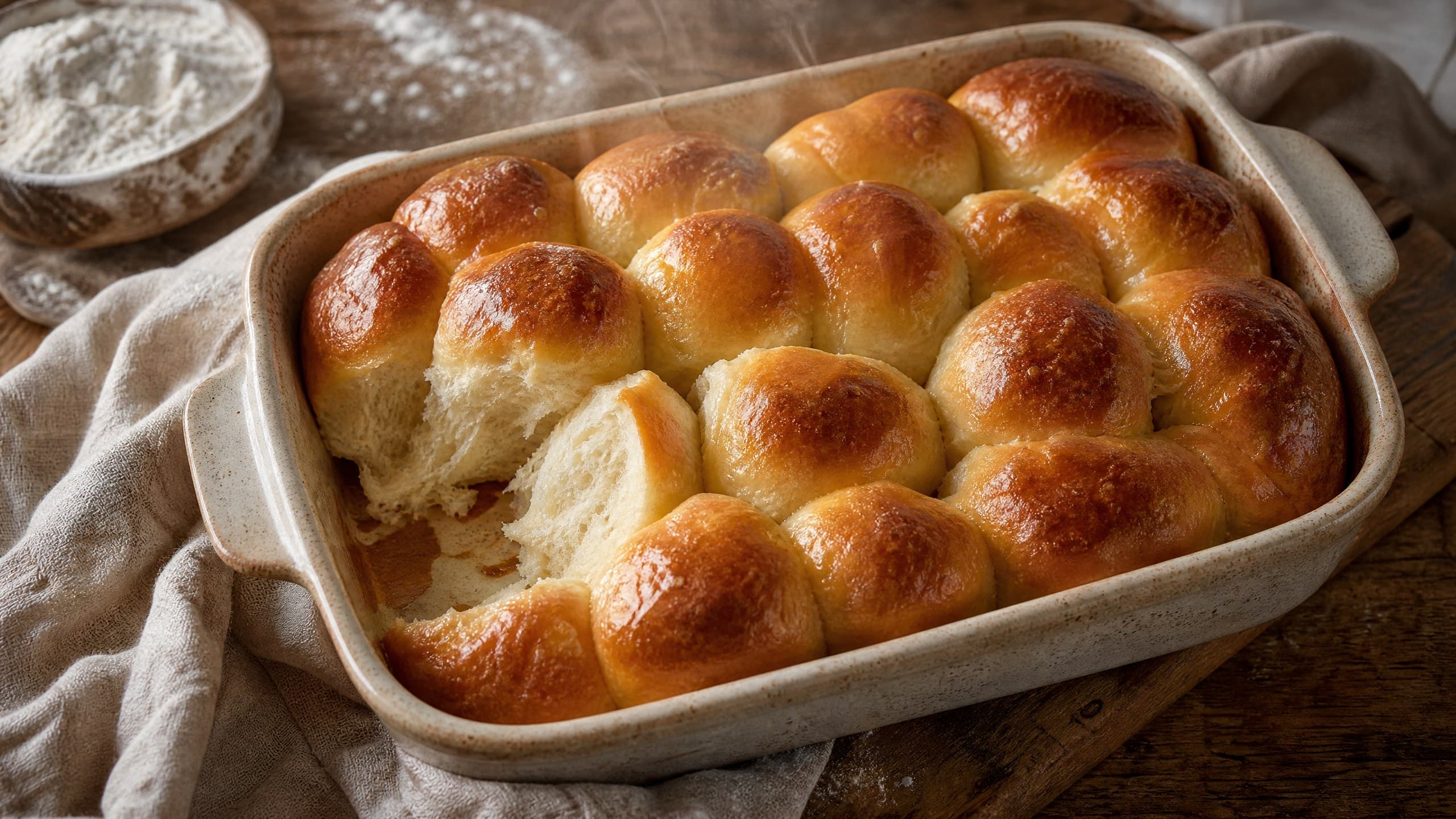
Sourdough dinner rolls are the easiest win in the discard jar: soft, pull-apart, lightly tangy little rolls enriched with butter so they stay tender, baked together in a pan so the sides stay pillowy while the tops turn golden. This recipe uses discard for flavor and a little yeast for a same-day rise, which means you can start at 3 p.m. and put warm rolls on the table for dinner. They take about 4 hours and are the kind of bread that disappears before the main course.
Why this recipe works
The combination of milk, egg, butter and a bit of sugar makes these an enriched, soft-crumbed roll rather than a rustic one, while the discard keeps them from tasting like plain white bread. Baking them snug in a pan is the trick: the rolls lean on each other, steam their shared sides soft, and pull apart in clean little squares — exactly what you want next to a bowl of soup or a holiday roast. Knead to a smooth, elastic dough and you'll get an even crumb with no dense spots.
Shaping and the pan
Twelve equal balls, tucked seam-down into a buttered pan, is all the shaping these need. Let them proof until puffed and just touching; that close spacing is what gives you the pull-apart edges. A gentle egg wash before baking adds color, but the real move is butter brushed on hot from the oven — it soaks in and keeps the tops soft instead of crusty.
Make-ahead and storage
These are built for holidays. Shape into the pan, refrigerate up to a day, then proof and bake when you're ready, or bake fully and freeze for up to 3 months. Reheat wrapped in foil so they steam back to soft rather than drying out. For more discard ideas, the sourdough discard recipes hub collects the best of them, and the troubleshooting guide helps if a batch goes sideways.
Ingredients
Weights in grams are the source of truth; cup measures are approximate.
- 150 g sourdough discard (unfed, straight from the fridge)
- 450 g bread flour (about 3 1/2 cups)
- 250 g warm milk (about 1 cup plus 1 tablespoon)
- 4 g instant yeast (about 1 1/4 teaspoons)
- 8 g fine salt (about 1 1/2 teaspoons)
- 40 g sugar (about 3 tablespoons)
- 50 g soft butter (about 3 1/2 tablespoons)
- 1 egg (about 50 g), for the dough
- 1 egg (about 50 g) plus 5 g milk, beaten, for the egg wash
- 15 g melted butter, for brushing after baking
Method
In a large bowl, whisk the bread flour, sugar and salt together.
Warm the milk to about 38°C (100°F), stir in the instant yeast, then add the sourdough discard, soft butter and egg, mixing until the discard loosens.
Pour the liquid into the dry ingredients and mix into a soft, slightly tacky dough.
Knead 8-10 minutes until smooth and elastic — the enriched dough will be soft but should clear the sides of the bowl.
Cover and let rise 1 1/2-2 hours at room temperature, until doubled and bubbly.
Divide into 12 pieces (about 70 g each) and shape each into a smooth ball, tucking the seam underneath.
Arrange the balls in a buttered 23 cm (9 inch) square or round pan, cover, and proof 1-1 1/2 hours until puffed and touching.
Brush gently with the egg wash, taking care not to deflate the proofed rolls.
Bake at 180°C (350°F) for 20-22 minutes until golden on top and the internal temperature reads about 88°C (190°F).
Brush the hot rolls with melted butter straight from the oven, then cool in the pan 10 minutes before lifting out to a rack.
Frequently asked questions
Can I make these with discard only and no commercial yeast?
You can, but they'll need a long cold ferment — shape, then retard in the fridge 8-12 hours before the final proof and bake. The fast version uses a little yeast for a same-day roll, while the discard still carries the tang either way. The fully wild rolls will also be more sour and a touch denser.
Why are my dinner rolls dry or crumbly?
Almost always over-baking or too little fat. Pull them at a true golden and an internal temperature around 88°C (190°F), and don't cut the butter — it's what keeps the crumb tender. A dry oven also firms them fast, so if your bake runs hot, check them 3-4 minutes early.
How do I get that soft pull-apart texture?
Bake them close together in a pan so the sides steam against each other and stay soft while only the tops brown. The sugar and butter in the dough do the rest. If you space them out on a sheet they'll come out more crusty and individual, which is fine — just a different roll.
Can I make these ahead for a holiday meal?
Yes. Shape the rolls into the pan, cover tightly, and refrigerate up to 24 hours; take them out and let them finish proofing at room temperature before baking. You can also bake fully, freeze for up to 3 months, and reheat wrapped in foil at 150°C (300°F) for 10-12 minutes.