Sourdough Discard Biscuits
Tender southern-style sourdough discard biscuits with flaky layers and a gentle tang. Unfed starter keeps them light and uses up jar scrapings.
By Maya Ellison · Reviewed by Maya Ellison · Updated August 29, 2026 · 2 min read
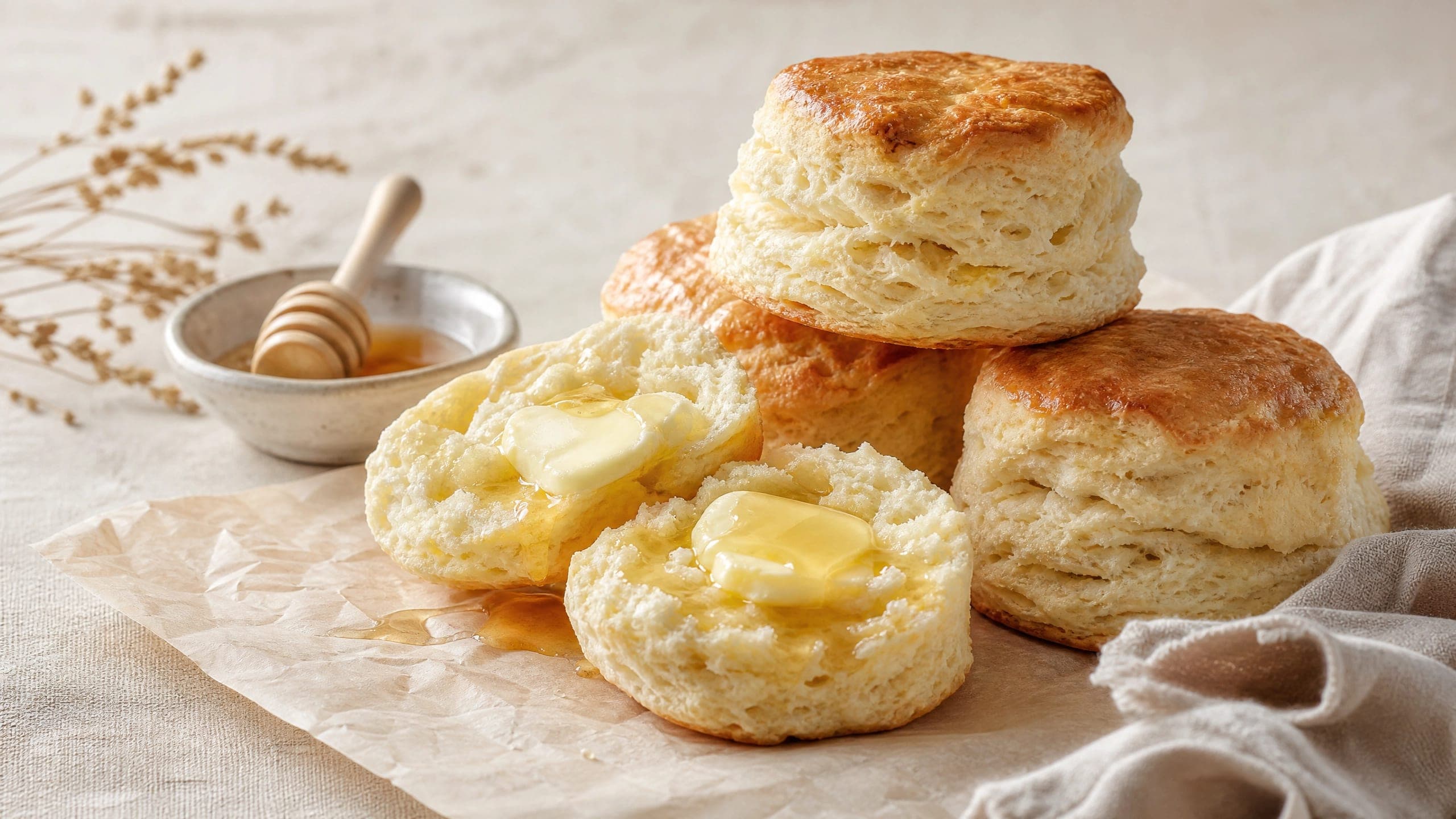
Sourdough discard biscuits are the tender, flaky, southern-style biscuit with a quiet tang from unfed starter worked into the dough. The discard uses up jar scrapings while the baking powder does the heavy lifting, so you get reliable rise and a crumb that pulls apart in soft layers. They're fast, forgiving, and the best excuse to keep a jar of discard in the fridge.
Why this recipe works
Biscuits are a chemical-leavened quick bread, so the discard here is flavor, not the engine. Its acidity tenderizes the flour and adds a gentle sour note that plain biscuits lack. Cold butter, cut in and left in pieces, steams into the flaky layers during a hot bake.
| Ingredient | Weight |
|---|---|
| All-purpose flour | 250 g |
| Sourdough discard | 120 g |
| Cold buttermilk | 120 g |
| Cold butter | 85 g |
The discard roughly replaces some of the liquid while adding character.
Lamination and cutting
Pat the shaggy dough out and fold it over itself a few times — that's the lamination that creates distinct layers. Keep the folds gentle; you're not kneading bread.
Cut straight down with a sharp cutter and don't twist. Twisting crimps the side walls and the biscuit can't spring. Brush the tops so they brown evenly.
Common mistakes
- Tough, bread-like crumb: overworked dough. Mix just until it holds, handle lightly.
- No rise: old baking powder or warm butter. Check the date and keep butter cold.
- Flat tops: twisted cutter or over-floured surface. Cut clean and straight.
- Dry interior: too much flour when patting. Use a light hand and a bench scraper.
Before you bake
Got a jar of unfed starter building up? The sourdough discard recipes page collects more ways to spend it, and the sourdough starter guide explains how to keep a steady supply. For the loaf that started it all, see the sourdough bread recipe.
Ingredients
Weights in grams are the source of truth; cup measures are approximate.
- 250 g all-purpose flour (about 2 cups), plus more for dusting
- 120 g sourdough discard, unfed
- 120 g cold buttermilk (about 1/2 cup)
- 85 g cold unsalted butter, cubed
- 8 g baking powder (about 1 3/4 teaspoons)
- 4 g fine sea salt (about 3/4 teaspoon)
- 2 g baking soda (about 1/2 teaspoon)
Method
Heat the oven to 425°F (220°C) and line a baking sheet with parchment.
Whisk the flour, baking powder, baking soda and salt. Cut in the cold butter until the mix looks like coarse crumbs with pea-sized pieces.
Stir in the sourdough discard and buttermilk just until a shaggy dough forms. Turn out onto a floured surface and pat together — do not knead.
Fold the dough over itself 3-4 times to build layers, then pat to about 2.5 cm thick. Cut with a 5 cm round cutter, pressing straight down without twisting.
Place on the sheet touching slightly, brush with buttermilk, and bake 15-18 minutes until golden and risen. Cool 5 minutes before serving.
Frequently asked questions
Can I use active starter instead of discard?
Yes, though discard gives the classic tang and uses up unfed starter. Active starter works too but tastes milder; the baking powder still carries most of the lift.
Why are my biscuits flat and tough?
Overworked dough or warm butter. Handle gently, keep everything cold, and cut straight down. Twisting the cutter seals the edges and stops the rise.
Do I need buttermilk?
It helps tenderness and reacts with the soda, but you can use plain milk with a teaspoon of lemon juice. The discard's acid already contributes some tang.
Can I make these ahead?
Cut and arrange the raw biscuits, freeze on the sheet, then bake from frozen adding 3-4 minutes. Or refrigerate shaped biscuits up to a day before baking.