Diastatic Malt Powder in Sourdough: What It Does
Diastatic malt powder in sourdough adds enzymes that boost rise, crust color and flavor. Learn how much to use, why it works and how it differs from non-diastatic malt.
By Maya Ellison · Reviewed by Maya Ellison · Updated August 29, 2026 · 3 min read
Quick answer
Diastatic malt powder is the quiet upgrade most home bakers discover too late. A spoonful changes how your sourdough rises, browns and tastes — and the reason lives in a word most recipe writers skip: enzymes.
What diastatic malt powder actually is
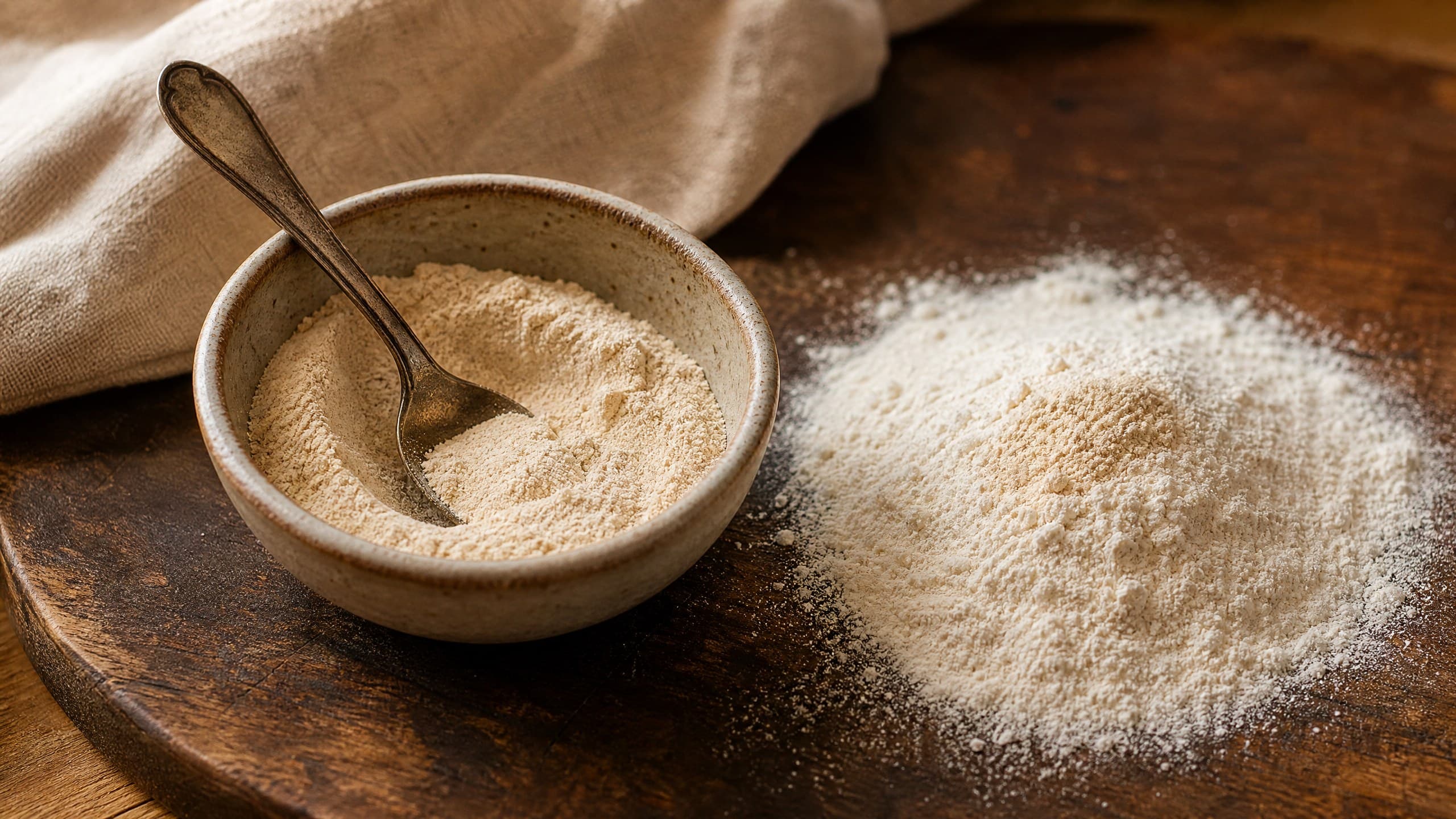
It's finely milled malted barley — barley that was sprouted, dried and ground. Sprouting is the key: it wakes up the grain's natural enzymes, mainly amylase, and drying locks them in. Unlike a flavoring, diastatic malt is alive with chemistry that keeps working in your dough.
What it does in sourdough
The amylase in the powder breaks a fraction of your flour's starch into maltose, a sugar your yeast and lactic bacteria can eat. That single change ripples through the loaf:
- Higher, more reliable rise. More sugar means more food for the culture, so the dough proofs faster and springs better.
- Deeper crust color. More surface sugar caramelizes in the oven, giving you that bakery-golden, almost lacquered crust.
- Milder, rounder flavor. The malt adds a soft, malty sweetness that balances sourdough's tang without making the bread taste like dessert.
Used at the right dose, it fixes pale, tight loaves more than any other additive.
How much to use
The rule is 1–2% of total flour weight. For a 500 g flour loaf, that's about 5–10 g — roughly half to a full teaspoon.
Start low. Too much diastatic malt over-activates the enzymes, which digest the gluten structure, leaving a slack, sticky dough and a gummy, gummy crumb. If your loaf feels weak or pasty inside, cut the dose and try again.
Add it to the dry flour and mix before the water goes in, so it's evenly distributed.
Diastatic vs non-diastatic: the confusion that ruins loaves
This is the mistake that catches everyone. The two sit side by side on the shelf and look nearly identical:
| Diastatic malt | Non-diastatic malt | |
|---|---|---|
| Enzymes active? | Yes | No (killed by heat) |
| Affects rise? | Yes | No |
| Affects crust color? | Yes (via sugar) | Slightly (flavor/color only) |
| Use | Dough improvement | Flavoring only |
Non-diastatic malt is essentially toasted malted-barley flour used for taste and a hint of color — think malted milkshakes. It will not boost your rise. If a recipe calls for diastatic and you use non-diastatic, the loaf will taste fine but behave like you added nothing.
Where to use it
Add diastatic malt to the final dough, not your starter. In a warm, wet starter the enzymes keep working and can thin the culture into something soupy and unpredictable. In the dough, the measured amount does its job during one controlled proof and stops when the bread bakes.
A good first experiment: bake your usual loaf, add 1% diastatic malt to the flour, and compare the crust and spring to a plain loaf. The difference is usually obvious by the second bake.
Frequently asked questions
What does diastatic malt powder do in bread?
Its live enzymes (amylase) convert some of the flour's starch into maltose, a sugar yeast and bacteria can ferment. That gives you more gas, a higher rise, a faster, more reliable proof, and a deeper golden crust because there's more sugar to caramelize. It also adds a gentle malty, almost honey-like note without making the loaf sweet.
How much diastatic malt powder should I use?
About 1–2% of total flour weight. For a typical 500 g flour loaf that's roughly 5–10 g, or 1/2 to 1 teaspoon. Start at the low end; too much enzyme over-softens the dough, makes it sticky and can leave a gummy crumb because it digests too much structure.
What's the difference between diastatic and non-diastatic malt?
Diastatic malt is malted barley that keeps its active enzymes — it changes the dough's behavior (rise, color, fermentation). Non-diastatic malt has been heated to kill those enzymes, so it's purely a flavoring and coloring agent, like a malted-milk powder. They are not interchangeable: using non-diastatic when a recipe wants diastatic gives you flavor but none of the fermentation boost.
Can I use diastatic malt powder in my sourdough starter?
You can, but it's unnecessary and harder to control. The enzymes keep working in a warm, wet starter and can over-liquefy it. Most bakers add diastatic malt to the final dough instead, where the measured amount does its job during a single, predictable proof.
What can I substitute for diastatic malt powder?
There's no perfect one-to-one swap. A small amount of barley malt syrup or a pinch of honey adds color and sweetness but no enzymes, so you lose the rise boost. Some bakers use a spoonful of whole-wheat or malted-barley flour for a similar effect. If you only need flavor, non-diastatic malt or a touch of brown sugar will do, though the crust won't deepen the same way.