Baking Flour vs All Purpose Flour for Sourdough
Baking flour vs all purpose flour for sourdough: protein content, absorption, crumb texture and when you can swap one for the other.
By Maya Ellison · Reviewed by Maya Ellison · Updated August 18, 2026 · 4 min read
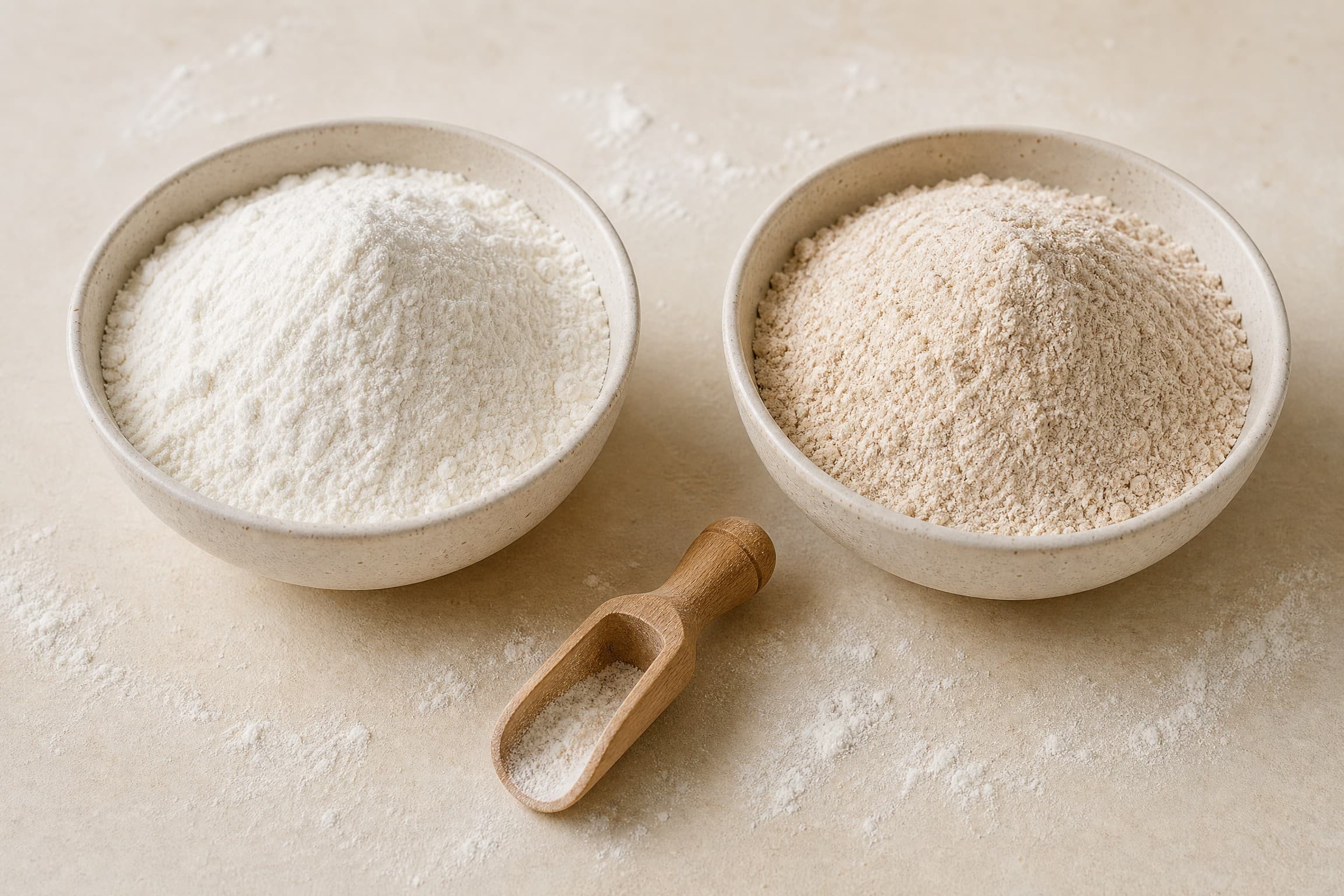
Quick answer
Two bags of flour in the pantry, one question: does the name on the bag actually change my bread? The short answer is yes and it comes down to one number — protein. The baking flour vs all purpose flour question is the most common one I get from home bakers and it's worth getting right, because it quietly decides how your crumb looks and how your dough handles.
The difference: protein content
Protein is gluten potential. When flour meets water and gets worked, its proteins link into gluten — the elastic network that traps gas and lifts the dough. More protein means a stronger network.
- Bread flour: 12–13.5% protein. Strong gluten, high absorption, big gas-holding power.
- All-purpose flour: 9.5–11.5% protein. Moderate gluten, softer texture, less gas retention.
The exact number varies by brand and region and it's always printed on the bag — usually in the nutrition facts. Flour names are marketing; protein percentages are data. That's the whole bread flour vs all purpose debate in one sentence.
Bread flour vs all purpose: how the dough behaves
Once you know the protein numbers, everything else follows:
- Gas retention. Bread flour's stronger gluten holds the carbon dioxide the starter produces, so the loaf rises higher and the crumb opens up. All-purpose lets gas escape sooner, which makes a tighter, finer crumb.
- Absorption. Bread flour drinks more water. At the same hydration, an all-purpose dough feels wetter and stickier than a bread-flour dough — not because anything is wrong, but because the flour can't soak up as much.
- Tolerance. Bread flour doughs forgive over-hydration and rough handling; all-purpose doughs need gentler folds and a shorter shaping window.
- Texture. Bread flour gives chewy, crackly crusts and a substantial bite. All-purpose bakes soft and tender, like good sandwich bread.
Can you use all purpose flour for sourdough?
Yes — with honest expectations. An all purpose flour sourdough loaf comes out soft, mild and reliably good, with a tighter crumb than the poster-boy loaves you see online. That's not a failure; it's a different bread and it's excellent for toast, sandwiches and anyone who finds artisan bread too chewy.
Three adjustments when baking with all-purpose:
- Drop hydration by 3–5% — all-purpose absorbs less water, so the dough will feel wetter at the same percentages.
- Extend the bulk ferment by 20–30 minutes — weaker gluten needs more time to develop and trap gas.
- Fold gently. All-purpose dough tears more easily; keep the stretch-and-folds soft.
Flour comparison table
| Flour | Protein | Absorption | Best use | Sourdough verdict |
|---|---|---|---|---|
| Bread flour | 12–13.5% | High | Crusty loaves, high hydration | Best all-round choice |
| All-purpose | 9.5–11.5% | Medium | Soft loaves, discard recipes | Works; tighter, softer crumb |
| Whole wheat | 13–15% | Very high | Flavor and structure | Great in 20–50% blends |
| Rye | 8–10%, little gluten | Very high | Flavor, dense loaves | Small percentages only |
When to use which
Reach for bread flour when you want the classic sourdough result: first loaves, high-hydration doughs, anything you plan to score and show off. It's also the friendlier flour for beginners, because the dough is stronger and more forgiving.
Reach for all-purpose when the goal is a soft, mild loaf — sandwich bread, dinner rolls, or any of the discard recipes that don't need a big rise. All-purpose is also the default for baking with young starters, where a strong crumb isn't the point.
Blending strategies
You don't have to choose. Most of my favorite loaves blend:
- 50/50 bread and all-purpose — a middle crumb that splits the difference and stretches the expensive bag.
- Bread flour base + 20% whole wheat — adds flavor without collapsing the structure.
- All-purpose base + 30% bread flour — keeps the softness while boosting the rise.
The full picture — protein numbers, whole grains, rye and how it all affects your starter — lives in the sourdough bread flour guide. And if you want to see what either flour does in an actual bake, the classic sourdough bread recipe is written to accept either one.
Frequently asked questions
Can I use all purpose flour for sourdough bread?
Yes — all purpose flour for sourdough bread makes a perfectly good loaf, just a different one. Expect a tighter, finer crumb and a softer crust and add 20–30 minutes to the bulk ferment so the weaker gluten can still develop. All-purpose is a fine starter flour and a great choice for sandwich-style bread.
Does bread flour make a visible difference in the loaf?
Yes. Bread flour's extra protein means more gluten, which holds more gas — so you get a taller rise, a more open crumb and more chew in the crust. The difference is obvious side by side and modest on the plate. It's the single easiest upgrade for a beginner's first loaf.
What exactly is the protein difference?
Bread flour runs about 12–13.5% protein; all-purpose runs 9.5–11.5% and the exact number varies by brand. Check the nutrition panel on the bag — it's always listed. That 2–4 point gap is the whole story behind how the two flours behave.
Can I substitute all-purpose for bread flour 1:1 in a recipe?
Yes, by weight, in any sourdough recipe — but adjust your expectations. The dough will feel wetter and slacker because all-purpose absorbs less water, so consider dropping the hydration by 3–5%. Then extend the bulk ferment by 20–30 minutes and let the weaker gluten catch up.
Which flour should I feed my starter?
Bread flour or whole wheat builds a stronger, faster-rising starter; bleached all-purpose ferments sluggishly. If all-purpose is all you have, feed with it — a consistent feeding routine matters more than the flour. The starter adapts to whatever you give it within a few feedings.