Barley Malt Syrup in Bread: Uses and Substitutes
Barley malt syrup in bread adds color, crust and a mild malty sweetness. Learn how much to use, what it does and the best substitutes like honey and malt extract.
By Maya Ellison · Reviewed by Maya Ellison · Updated August 29, 2026 · 3 min read
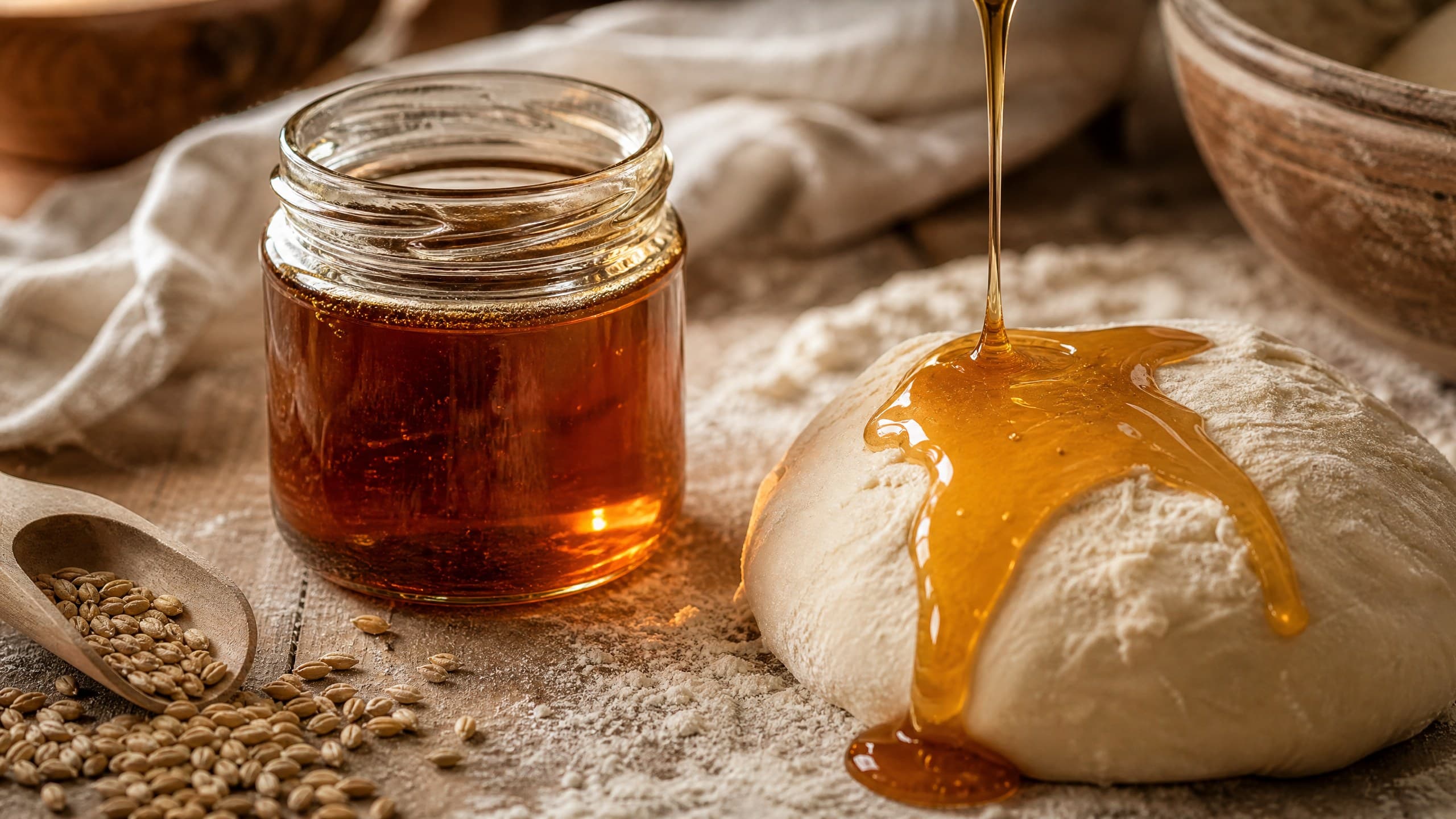
Quick answer
Barley malt syrup is one of those old-school bread ingredients that fell out of fashion and is quietly coming back. It's not a gimmick — a spoonful genuinely changes the crust and the crumb in ways white sugar never could.
What barley malt syrup is
It's a thick, dark, sticky syrup made by sprouting barley, drying it, and extracting the natural sugars. Unlike refined sugar, it's only lightly processed and keeps a strong malty, almost molasses-adjacent flavor — but far less sweet than you'd expect from how thick it looks.
What it does in bread
Barley malt syrup earns its place through three effects:
- Crust color. Its sugars caramelize in the oven, giving you a deeper, glossier, more bakery-like golden crust.
- Mild flavor. It rounds sharp sourdough tang with a soft malty sweetness — present, but never dessert-like.
- A little fermentation fuel. The sugars feed yeast and your sourdough culture, nudging the rise along, though gently compared to straight sugar.
It's a character ingredient. You reach for it when you want depth, not when you want sweet.
How much to use
Use 1–2 tablespoons per 500 g of flour — about 1–3% of flour weight. That range gives clear color and flavor without making the dough sticky or the loaf sweet.
Because it's a liquid, trim a tablespoon or two of your water so the hydration stays where the recipe intended. Warm the syrup or dissolve it in the recipe's water so it spreads evenly instead of clumping.
Barley malt syrup vs diastatic malt
Worth stating clearly, because the names trip people up:
| Barley malt syrup | Diastatic malt powder | |
|---|---|---|
| Form | Thick liquid sweetener | Dry powder |
| Enzymes? | No | Yes |
| Main job | Flavor + crust color | Rise + crust (via enzymes) |
| Interchangeable? | No | No |
Both come from malted barley, but barley malt syrup is a sweetener and diastatic malt powder is a dough conditioner. Swapping one for the other changes what the loaf does, not just how it tastes.
Substitutes when you're out
If the jar's empty, reach for one of these:
- Honey — the easiest 1:1 swap. Similar sweetness and it browns the crust well; flavor is floral, not malty.
- Malt extract — the brewing-supply liquid; closest in taste, though often more potent, so use a bit less.
- Brown rice syrup — milder and less sweet, decent for color.
- Maple syrup — works in a pinch but brings a distinct flavor.
Skip white sugar if you want the malty depth — it sweetens but won't give you the same color or rounded flavor.
Using it in sourdough
Barley malt syrup is friendly to sourdough. Add it to the final dough with the liquids at 1–2% of flour weight. It won't replace a feeding or alter your starter's behavior, but it will soften the sour edge and build a crust with more glow. For a country loaf that tastes like it came from a wood-fired bakery, it's one of the smallest changes with the biggest visual payoff.
Frequently asked questions
What does barley malt syrup do in bread?
It does three quiet jobs: it adds a gentle, not-too-sweet malty flavor; it deepens crust color because its sugars caramelize in the oven; and it gives yeast and sourdough cultures a little extra fermentable sugar, which can help the rise. It's used for character and crust more than for sweetness — a loaf with barley malt syrup isn't a sweet loaf.
How much barley malt syrup should I use?
About 1–2 tablespoons per 500 g of flour, which is roughly 1–3% of flour weight. That's enough for noticeable color and flavor without making the dough sticky or sweet. Because it's a liquid sweetener, shave a tablespoon or two off your water to keep the hydration right.
What can I substitute for barley malt syrup?
Honey is the easiest swap — similar sweetness and it browns the crust well, though the flavor is floral rather than malty. Malted barley extract (the liquid from brewing supply) is the closest in taste. Brown rice syrup is milder and less sweet; maple syrup works in a pinch but tastes distinct. Avoid white sugar if you want the malty depth — it sweetens but doesn't bring the same color or flavor.
Is barley malt syrup the same as diastatic malt powder?
No. Barley malt syrup is a sweetener with no active enzymes — it flavors and colors. Diastatic malt powder is dried malted barley with live enzymes that change how the dough rises and browns. They're often confused because both come from malted barley, but they do different things and aren't interchangeable.
Can I use barley malt syrup in sourdough?
Yes, and it pairs nicely with sourdough's tang, rounding the sourness with a malty note. Add it to the final dough with the liquids at about 1–2% of flour weight. It won't replace a feeding or change your starter, but it will give the crust more color and the crumb a softer, more complex flavor.