Easy Multigrain Sourdough Bread (Simple, Baked in a Loaf Pan)
A genuinely easy multigrain sourdough bread baked in a loaf pan — no complicated shaping required. Full of seeds and grains with a light, soft crumb.
By Maya Ellison · Reviewed by Maya Ellison · Updated August 30, 2026 · 2 min read
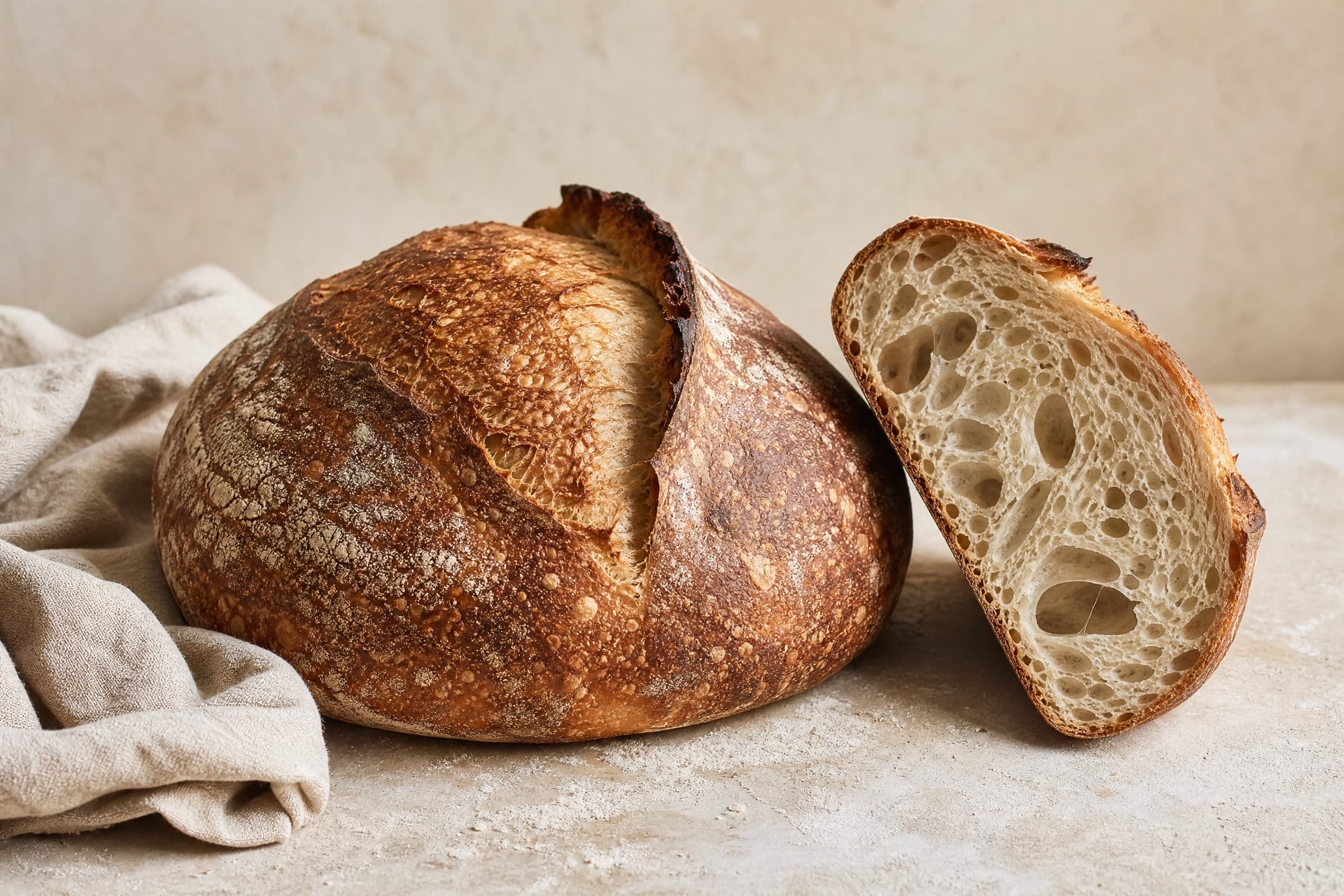
Multigrain sourdough bread is usually the preserve of fancy bakeries, but it's genuinely easy to make at home — especially when you bake it in a loaf pan. No banneton, no scoring, no Dutch oven, no worrying about your shaping. You get a soft, seed-packed, sandwich-friendly loaf that tastes and looks like it came from a specialty shop.
This easy multigrain sourdough bread recipe turns a handful of everyday seeds into a beautiful, crusty loaf with real flavor.
Why this one is easy
Most multigrain recipes are just a plain sourdough with seeds added. The difference here is the loaf pan. Because you bake it in a tin:
- No tricky shaping — you just drop the dough in the pan.
- No scoring, no banneton, no steaming — the pan does the work.
- A soft, sliceable crumb that's perfect for sandwiches and toast.
If you've been put off by sourdough's reputation for finicky technique, this is a fantastic place to start. And if you're already comfortable, it's a satisfying, low-effort loaf that fills the sandwich drawer all week.
The base
Start with the same sourdough bread you know: bread flour, water, salt and a strong, active starter. Add a little whole wheat for depth, and stir in a toasty, fragrant multigrain seed mix during your stretch-and-folds.
Toasting the seeds first is a small step that pays off — it wakes up their flavor and keeps them from feeling raw in the finished bread.
A soft, sandwich-friendly crumb
Because it's baked in a pan, this loaf has a softer, more open-until-compact, sliceable crumb than an artisan boule. It toasts beautifully, holds together well for grilled cheese or sandwiches, and stays fresh for a few days thanks to the whole grains. Slice and freeze any you won't eat right away — multigrain bread freezes beautifully.
A relaxed bake
The dough bulk-ferments until soft and jiggly, shaped into a loose cylinder for the pan, then proofed either at room temperature or in the fridge for deeper flavor. When it's puffy and risen, bake it hot with a foil or lid cover for the first half, then uncovered to darken and crisp the sides.
Because there's no scoring and no banneton, cleanup is a breeze — exactly what "easy" should mean. If you want to experiment with other seed-forward loaves or use up starter, the discard recipes hub and our whole wheat sourdough are great next steps.
Ingredients
Weights in grams are the source of truth; cup measures are approximate.
- 450 g bread flour
- 50 g whole wheat flour
- 350 g water
- 100 g active sourdough starter (fed a few hours before)
- 10 g fine sea salt
- 75 g multigrain seed mix (sunflower seeds, flax, sesame, oats, millet or your favorites)
- Extra rolled oats or seeds, for topping (optional)
Method
Toast and cool the seed mix: lightly toast the seeds in a dry pan until fragrant and let them cool before adding to the dough.
Autolyse: mix the water and starter, add both flours and the salt, and rest 1 hour to fully hydrate.
Form the dough: work around the bowl stretching the edges into the centre about 20-25 times into a soft ball, then rest 30 minutes covered.
Add the seeds: fold the cooled seed mix through the dough over the next 1-3 stretch-and-fold sets so it's spread evenly without tearing the gluten.
Stretch and fold: do about 4 sets, 4 stretches each, 20-30 minutes apart, until the dough is strong and smooth.
Bulk ferment: leave covered at room temperature until nearly doubled — soft, jiggly and full of bubbles.
Shape for the pan: gently degas, shape the dough into a rough cylinder, and place seam-side down in a lightly oiled 9x5-inch loaf pan.
Cold or warm ferment: cover and either proof at room temperature until puffy or refrigerate at least 5 hours (up to 24) for deeper flavor.
Bake at 450°F (230°C): place the pan in the oven, bake 25 minutes covered with foil or a lid, then uncover and bake 15-20 minutes more until deep golden and the loaf reads 200°F (93°C) inside.
Cool in the pan 10 minutes, then on a wire rack at least 2 hours before slicing.
Frequently asked questions
What seeds and grains should I use?
Use whatever you have or love: sunflower seeds, flax, sesame, rolled oats, millet, poppy seeds or hemp hearts all work. Keep the total to about 75 g so the loaf still rises well. Toasting the seeds first brings out their flavor and keeps them from feeling raw.
Do I need a special pan or equipment?
No. The whole point is simplicity — a standard 9x5-inch loaf pan is all you need. There's no banneton, no scoring, no Dutch oven, no tricky shaping. If you prefer a freestanding artisan loaf, this dough will happily bake in a Dutch oven too, but the pan keeps it genuinely easy.
Why is my multigrain bread dense or heavy?
The seed mix adds weight, so the dough needs to rise a touch longer than a plain loaf. Make sure you bulk-ferment until the dough is genuinely airy and jiggly before shaping, and don't overwork it when folding in the seeds. Whole grains also absorb water, so a slightly tackier dough is fine.
Can I use whole wheat or other flours?
Yes. You can push the whole wheat up to half the total for more nutrition and flavor, though the loaf will be a little denser. Many home bakers keep the base mostly bread flour to preserve the soft, light crumb, then rely on the seeds and grains for the multigrain character.
How is this different from a regular artisan sourdough?
Three things: the multigrain seed mix, the whole wheat touch, and the loaf pan. Baking in a pan means no shaping, no scoring and no banneton — it just produces a soft, sandwich-friendly loaf. That makes it a great entry point if you're newer to sourdough or short on time.
How should I store and slice it?
Store it cut-side down on the counter for a couple of days, or slice and freeze what you won't eat soon — multigrain bread freezes really well. For the best texture, wait for the loaf to cool fully before slicing so the crumb sets instead of gumming up. Our [storage guide](/guides/how-to-store-sourdough-bread) has tips.