Sourdough Canelé Recipe (Canelés de Bordeaux)
A sourdough canele pastry recipe: classic canelés de Bordeaux with discard in the batter, copper molds, beeswax, a 24-hour rest and a crackling crust.
By Maya Ellison · Reviewed by Maya Ellison · Updated August 18, 2026 · 3 min read
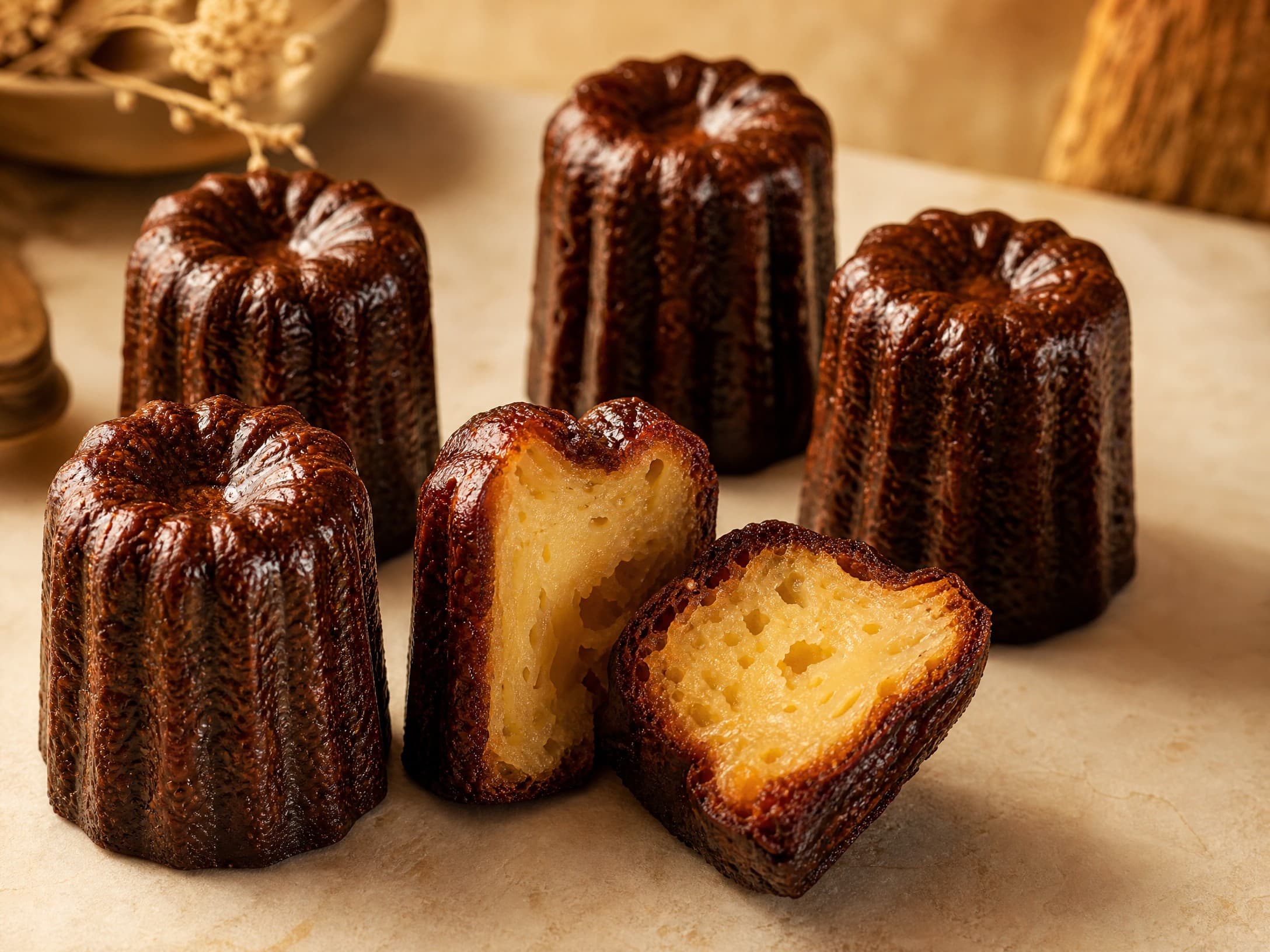
This sourdough canele pastry recipe makes the real thing: twelve canelés de Bordeaux with a crackling mahogany crust, a rum-and-vanilla custard middle and a barely-there tang from 100 g of sourdough discard in the batter. Discard in canelé is an old bistro trick, not a gimmick — the lactic acid in the starter subtly firms the custard, brightens the vanilla and rounds out the caramel's edge, which is why you'll find it in Bordeaux patisseries that would never call themselves sourdough bakers. The recipe runs a patient 25 hours, but almost all of it is a 24-hour batter rest. The actual work is 20 minutes.
Why this recipe works
A canelé is a study in contradictions: a brittle, near-black shell hiding a creamy, almost molten interior. Both textures come from the same engineering. The flour, eggs and sugar form a sturdy custard that holds shape, while a blast of 450°F heat caramelizes the exterior before the center can cook through — then a long, gentler bake at 375°F finishes the job without a pale soggy middle. The discard earns its keep in two quiet ways: its acid helps the batter set with a clean bite and its fermentation breaks down enough starch that the interior turns silky rather than pasty. If you keep a thriving starter, you already have what this recipe needs.
The key technique
Rest the batter, heat the molds. Those are the two moves that separate transcendent canelés from sad little custard muffins. The 24-hour rest lets the flour hydrate fully and the batter settle into a syrupy uniformity — skip it and you'll bite into floury pockets. Preheating the molds inside the oven matters just as much: cold batter hitting hot metal flashes to a crackling shell on contact. Warm molds, lukewarm batter and a hesitant oven are the three ways this recipe humbles a confident baker.
Is this recipe for you?
This is one of those rare happy cases where the hardest part is financial, not technical. If you own silicone molds, you can have excellent canelés on your first try. If you buy copper molds, you'll also have excellent canelés on your first try — you'll just have spent more and cleaned more carefully. The real prerequisite is patience for a 24-hour wait and an oven you trust. If you can bake a tray of muffins without stress, you can make canelé. It's also a brilliant way to spend sourdough discard recipes you'd otherwise toss.
Molds and beeswax
Copper with beeswax is the classic: melt the beeswax, brush it into the still-warm molds, follow with a whisper of butter and you get the dark, crackled, iconic crust. Silicone molds produce a very good canelé with a lighter shell and zero maintenance — the honest tradeoff is a softer, more uniform crust and a slightly flatter bottom. Beeswax without butter sticks aggressively; butter without beeswax gives a thinner crust. Both work. Neither is a reason to skip the recipe.
Swaps and variations
This is a small-batch, exact-science batter — resist most substitutions. Dark rum for light, yes, with more flavor. A split vanilla bean is worth the money over extract. Some bakers add a spoon of honey or a scrape of orange zest to the custard; both are lovely and both soften the crust slightly. The one swap that reliably fails is any attempt to replace the flour with a gluten-free blend — ask the troubleshooting guide for company on that one. Keep the rest of the recipe untouched and it will repay you.
Storage
Canelés are best the day they're baked, after resting at least an hour on a cooling rack — the crust needs to settle or it will crack into shards under the knife (and that's not entirely a bad thing). Day-old canelés refresh in a 350°F oven for 6-8 minutes. Beyond two days, they soften into a pleasant, cake-like version of themselves that's good but not canonical. They don't freeze well, so bake them to share, or recalculate the batch the way pros do: fewer molds, more coffee.
Ingredients
Weights in grams are the source of truth; cup measures are approximate.
- 500 g whole milk
- 125 g all-purpose flour
- 250 g granulated sugar
- 100 g sourdough discard (unfed, straight from the fridge)
- 3 large egg yolks (about 55 g)
- 1 large egg (about 50 g)
- 45 g dark rum
- 1 vanilla bean, split (or 1 1/2 tsp vanilla extract)
- 30 g unsalted butter, melted and cooled
- 1 pinch (1 g) fine salt
- 50 g beeswax pellets (optional, for copper molds)
Method
In a saucepan, warm the milk with the salt and the split vanilla bean over medium heat until it just barely shimmers at the edges — never boil. Remove from heat and let it infuse until it's warm, not hot.
In a large bowl, whisk the eggs and egg yolks with the sugar until pale and slightly thickened, about 2 minutes.
Whisk in the flour until smooth, then stir in the sourdough discard, melted butter and dark rum.
Slowly whisk in the warm milk in a thin stream until the batter is completely smooth. Strain through a fine sieve to catch any stray bits of egg.
Cover the batter and rest it in the fridge for at least 24 hours. This rest is non-negotiable: it hydrates the flour, settles the batter and produces the chewy interior canelé is famous for.
An hour before baking, brush the inside of each copper mold with melted beeswax, then with a thin layer of melted butter. If you're using silicone molds, skip the beeswax and just butter them.
Place the molds on a sheet pan in a cold oven and heat to 450°F with the molds inside — the molds must be hot when the batter goes in.
Whisk the rested batter gently from the bottom up, then pour it into the hot molds, filling each about 90% full.
Bake at 450°F for 10 minutes — this blast sets the dark, caramelized crust — then drop the temperature to 375°F and bake 50-60 minutes more, until the tops are deeply mahogany and crisp to the touch.
Check one canelé: it should resist gently but not feel baggy. If the center jiggles like custard, return them for 10 more minutes.
Unmold immediately — canelés stick as they cool. Rap the molds sharply upside down and let the canelés rest on a rack for at least 1 hour before tasting.
Frequently asked questions
Copper molds or silicone?
Copper gives the authentic result: a thicker, darker, cracklier crust and a taller, cleaner shape. It also costs real money and demands gentle care. Silicone is cheaper, non-stick and perfectly adequate for a first batch — you'll get a lighter crust and a softer, slightly blotchier bottom. Start with silicone, upgrade to copper when you're hooked.
Do I really need beeswax?
For copper molds, yes — a beeswax-and-butter coating is what creates the thick caramelized shell. Beeswax alone forms a cracked, blackened crust; butter alone gives a burnished but thinner one. If you only have butter, your canelés will be good; with beeswax they're properly great. Silicone molds don't need either.
Why are my canelés pale?
Almost always an under-hot oven. The first 10 minutes at 450°F are the entire secret to the crust — if the oven runs cool, or the molds weren't preheated inside it, the batter steams instead of caramelizing. Calibrate your oven with an inexpensive thermometer and re-check your mold placement: they need direct, circulating heat.
Why is the middle of my canelé raw and soggy?
Three usual suspects: batter poured into cold molds, a weakened oven temperature, or too short a final bake. The batter should rest 24 hours so the flour fully hydrates and it should hit hot molds at 90% fill — overfilled molds stay raw in the center. Bake at 450°F for 10 minutes, then a full hour at 375°F.
Can canelés be made gluten-free?
Honestly, not well. The flour, sugar and egg structure is the entire architecture of a canelé — a gluten-free flour blend will bake into a custard-like or gummy result that lacks the chewy, springy interior. If you must try, a 1:1 rice-based blend gives the closest result, but manage your expectations.